ディープフェイクは、さらに痛みを伴う例だ。他人の顔を同意なく合成した性的な画像が広まり、被害が生じた。米国では2025年5月にTAKE IT DOWN Actが成立し、同意のない性的画像のうち一定の要件に該当するものの投稿を処罰し、プラットフォームに削除のための手続きを求めることになった。それ以前にも適用できる法律はあったが、新たな被害のあり方に十分対応できない隙間があった。その隙間は、被害者にとって抽象的な制度の問題ではなかった。
The pace of technological change, and the time society needs to adapt
Joo-Ho Lee
A modest-looking promise becomes something quite different when it keeps doubling.
1. The Arithmetic of a Single Gold Coin
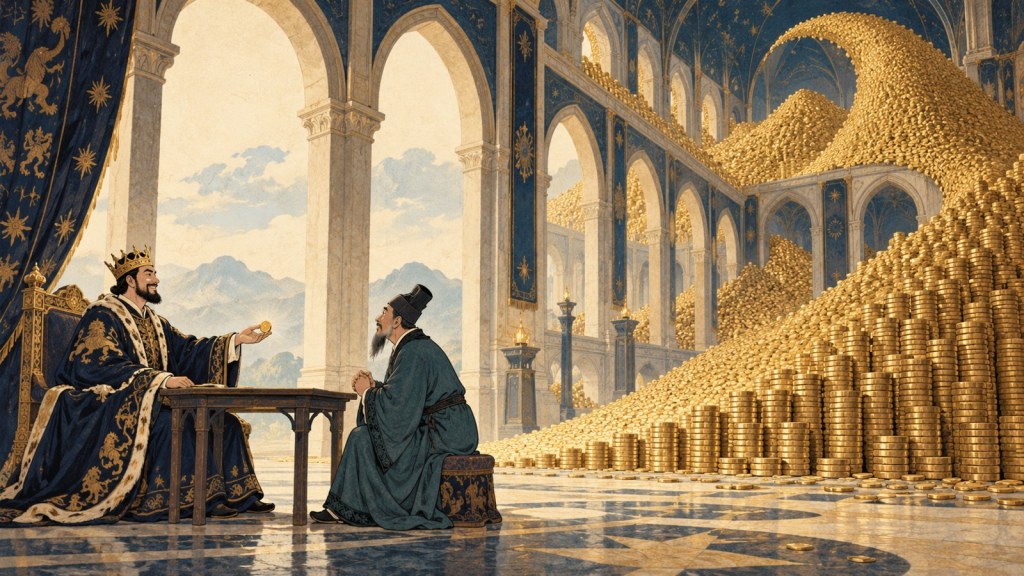
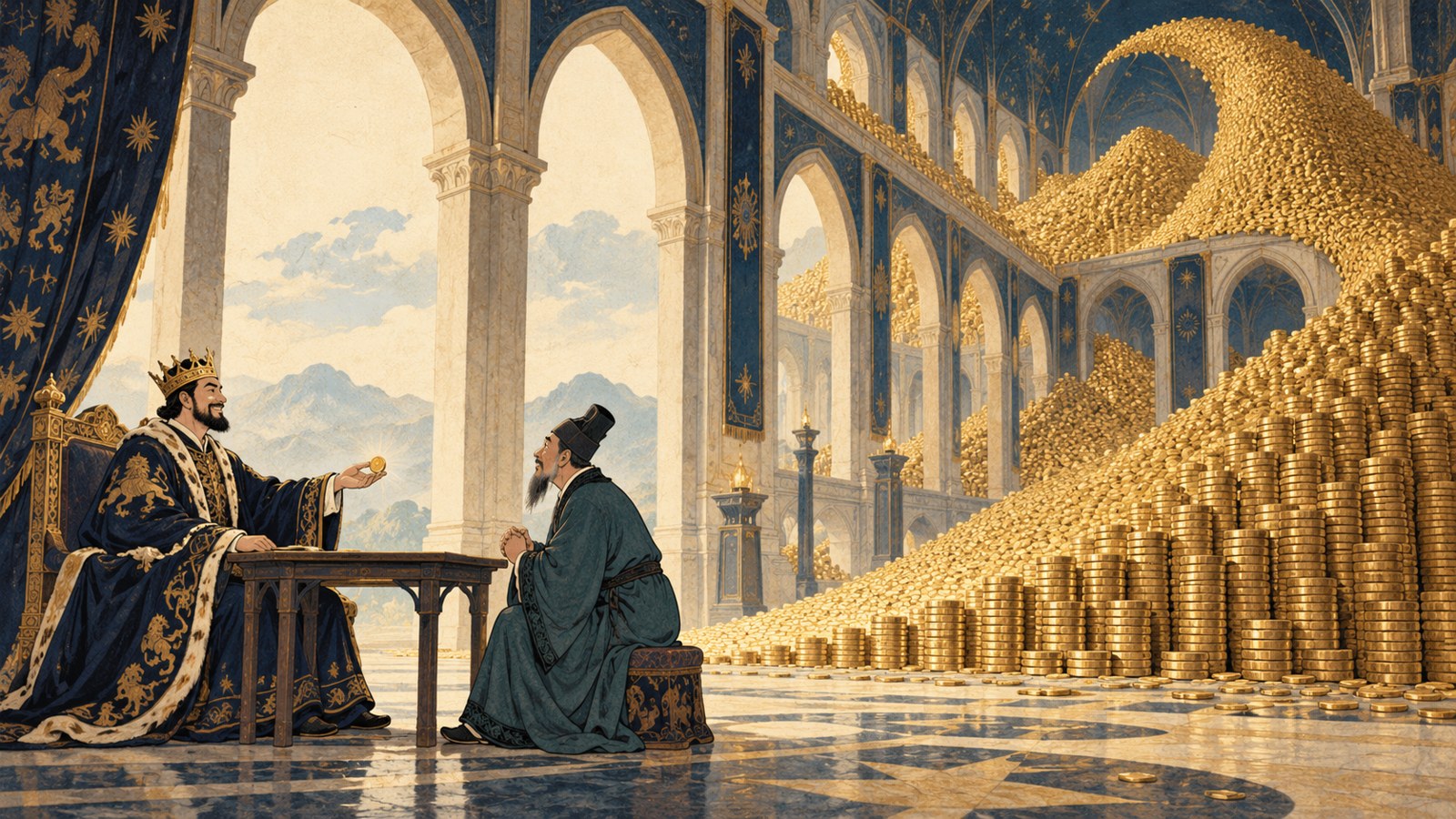
Once upon a time, a king invited a subject who had served him well to name his reward. The request sounded surprisingly modest: one gold coin today, two tomorrow, four the day after. Nothing more than twice the previous day’s payment, every day. The king smiled and agreed on the spot.
For the first ten days, there was hardly anything to worry about. The payment on day ten was 512 coins, and the total paid out so far was just 1,023. Small change for a royal treasury. By day twenty, however, that day’s payment alone came to 524,288 coins. The running total had passed one million. At eight grams per coin, that was about 8.4 metric tons of gold. Enough, perhaps, to make the treasurer take another look at the books.
But the real story unfolds over the next ten days. On day thirty, the king owes roughly 537 million coins in a single payment. The total for all thirty days is about 1.074 billion coins, weighing some 8,600 metric tons. That is more than the roughly 8,100 metric tons in the United States’ official gold reserves. By day thirty-five, the total weight exceeds 270,000 metric tons. Even all the gold humanity has ever mined would not be enough to keep the promise.
The point is not simply that the numbers get big. When the payment doubles every day, today’s payment exceeds everything paid out before it. The payment on day thirty is exactly one coin more than the combined payments of the previous twenty-nine days. A promise that initially seemed manageable becomes an entirely different problem.
I think of this story when I look at technological change today. Of course, technologies do not all double at a steady rate like those gold coins. Still, the fable raises a question: are we judging tomorrow’s changes only by the size of what we see today?
2. The Long, Slow Beginning
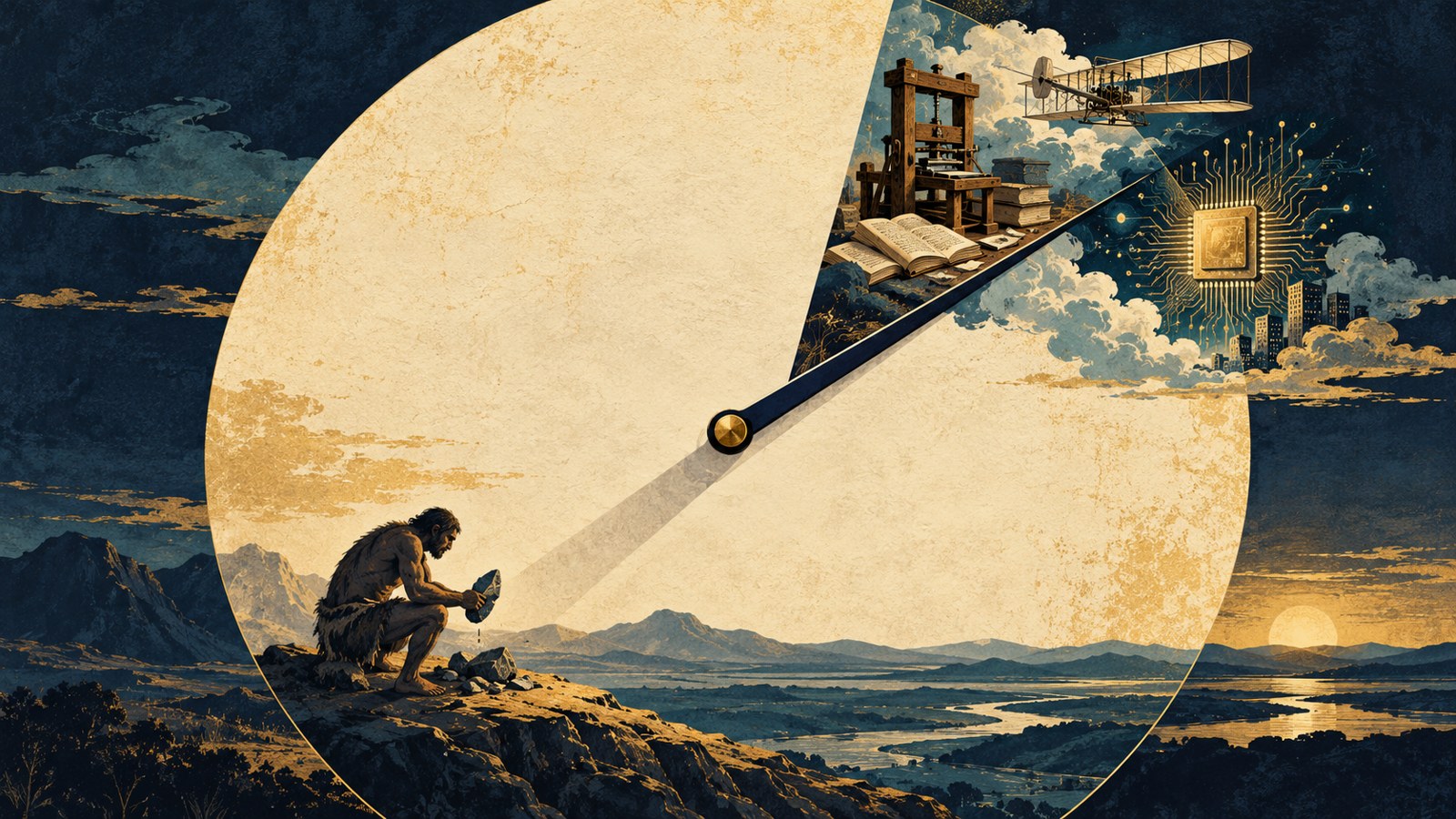
The oldest stone tools currently known were found at Lomekwi in Kenya and date back about 3.3 million years. Imagine compressing those 3.3 million years into a single twenty-four-hour day. At midnight, someone chips a stone to make a cutting edge.
Most of the day passes. Ways of shaping stone change; knowledge of how to use fire accumulates. There is change, but viewed from the present, the intervals between developments seem almost unimaginably long.
The beginnings of agriculture, around 12,000 years ago, arrive at about 11:54:46 p.m. on this clock. A little over five minutes remain before midnight. Early writing in Mesopotamia, around 5,200 years ago, appears at 11:57:44 p.m., just over two minutes before the day ends.
Then familiar milestones crowd into the final seconds. Gutenberg’s development of metal movable-type printing in Europe in the mid-fifteenth century comes about fifteen seconds before midnight. Watt’s patent for improvements to the steam engine in 1769 arrives about seven seconds before midnight; the Wright brothers’ first powered flight in 1903, about three seconds. Taking 2026 as our present, the public release of ChatGPT in late 2022 falls roughly a tenth of a second before midnight.
Much of what we consider everyday life fits into those last few seconds. Changes that once accumulated over countless generations now arrive one on top of another within a single lifetime. We have correspondingly less time to understand new tools and develop the customs and rules to live with them.
Compress 3.3 million years into one day, and much of everyday life falls in its final seconds.
3. The Time Society Needs
New technologies have always unsettled society. Printing changed the routes by which knowledge spread; the automobile changed the routes by which people and goods moved. Neither arrived with a finished set of rules and ways of life to match.
As printing houses spread across Europe from the mid-fifteenth century onward, books and debates reached wider audiences. Printed material also played an important role in the Reformation. A change in the tools for making books helped broaden arguments about religious authority and political order. Adjusting to this new information environment was a long and sometimes turbulent process.
The changes surrounding the automobile are more concrete. Britain’s so-called Red Flag Act of 1865 required a person carrying a flag to walk ahead of mechanically propelled vehicles on the road. It was one response to the problem of fitting unfamiliar machines into existing roads. Britain introduced driving licenses in 1903 and compulsory driving tests in 1935. Traffic signals, insurance, seat belts, and other measures found their place at different times.
None of this was a peaceful process. Industrialization brought labor exploitation, accidents, and pollution, and some of the damage went unaddressed for a very long time. It would be hard to argue that societies in the past kept up with technology particularly well. But when a technology took years to build out physically and bring into widespread use, there was relatively more time to try out institutions and revise them.
Digital technology is changing those conditions. Delivering a new feature to people who are already connected does not require a new factory or a new road. While society is still looking for answers, the technology can move on.
4. The Later Days of the Gold-Coin Story
On December 17, 1903, the Wright brothers’ first flight covered about thirty-seven meters in twelve seconds. It would not have crossed a football field. Sixty-six years later, in 1969, humans set foot on the Moon. A child who heard the news of that first flight could have watched the Moon landing on television in old age. Flight and space travel had both arrived within a single lifetime.
The numbers in semiconductors tell an equally striking story. Intel’s 4004 microprocessor, released in 1971, contained around 2,300 transistors. NVIDIA’s Blackwell GPU, announced in 2024, contained 208 billion across two chip dies. That is about ninety million times as many. Transistor count, of course, is not the same as performance, nor is it a measure of progress across science and technology. It does, however, show how much the physical foundation of computing has changed.
Artificial intelligence developed on that foundation. In 2016, AlphaGo defeated the ninth-dan Go master Lee Sedol by four games to one. AlphaGo Zero, announced the following year, learned by playing against itself without studying records of human games. It defeated the version that had played Lee Sedol by one hundred games to zero.
Released in late 2022, ChatGPT brought this change out of the laboratory and into everyday life. Anyone could ask a question on the web and get an answer. The internet and smartphones had already laid the paths along which it could spread. Yet trying a service once is very different from changing how a school or a business works. Access can grow quickly; learning to use a tool well and deciding who is responsible for what take longer.
The way research is done has also begun to change. The AlphaFold database has made structure predictions available for more than 200 million proteins. A prediction is not experimental confirmation. Even so, researchers now have a vastly larger set of starting points for forming hypotheses and deciding which experiments to pursue.
This is what draws my attention. Technology has long helped us create the next technology. Now AI assists with parts of that process, including design, coding, and data analysis. That opens up the possibility of shortening the time it takes to develop what comes next. Experiments and validation still take time; energy and cost remain constraints. But if the process of making new technologies accelerates too, the next change may arrive before society has grown accustomed to the last one.
5. Struggling to Keep Our Balance
Law, morality, and culture move at a different pace from technology. Laws must reconcile competing interests, and customs take shape through repeated experience. That slowness is not necessarily a flaw. Part of what makes institutions dependable is that they do not change on a whim. The question is whether we can preserve that care while responding to change.
The European Union’s AI Act illustrates the difficulty. The European Commission proposed the legislation in April 2021. ChatGPT appeared in late 2022 while the proposal was still being debated, and the final law included provisions for general-purpose AI models. The law entered into force in August 2024 and is being applied in stages. Even as lawmakers were writing it, the technology and market they sought to regulate were changing.
Deepfakes offer a more painful example. People have been harmed by the spread of sexual images made using their faces without their consent. In the United States, the TAKE IT DOWN Act became law in May 2025, criminalizing the publication of certain nonconsensual intimate images and requiring platforms to provide removal procedures. Some existing laws already applied, but gaps remained in how adequately they addressed these new forms of harm. For victims, those gaps were far from an abstract problem of institutional design.
The questions of morality and culture are harder still. In a work made with AI’s help, where does human creativity begin and end? Is a student’s AI-written report cheating, or is it like using a calculator? Does recreating a deceased family member’s voice with AI bring comfort, or make grieving harder? The answers will vary with the context and with how the technology is used.
What about an apology written by AI? The words might help someone express genuine remorse, or give them a way to avoid responsibility. New tools also reshape our sense of what counts as sincerity and good manners.
There has always been a gap between technology and society. Now, before we have narrowed it, another change arrives. While we amend one law and get used to a new set of social expectations, technology is already posing the next question. We need to ask whether catching up after the fact is enough, and what we can do to prepare beforehand.
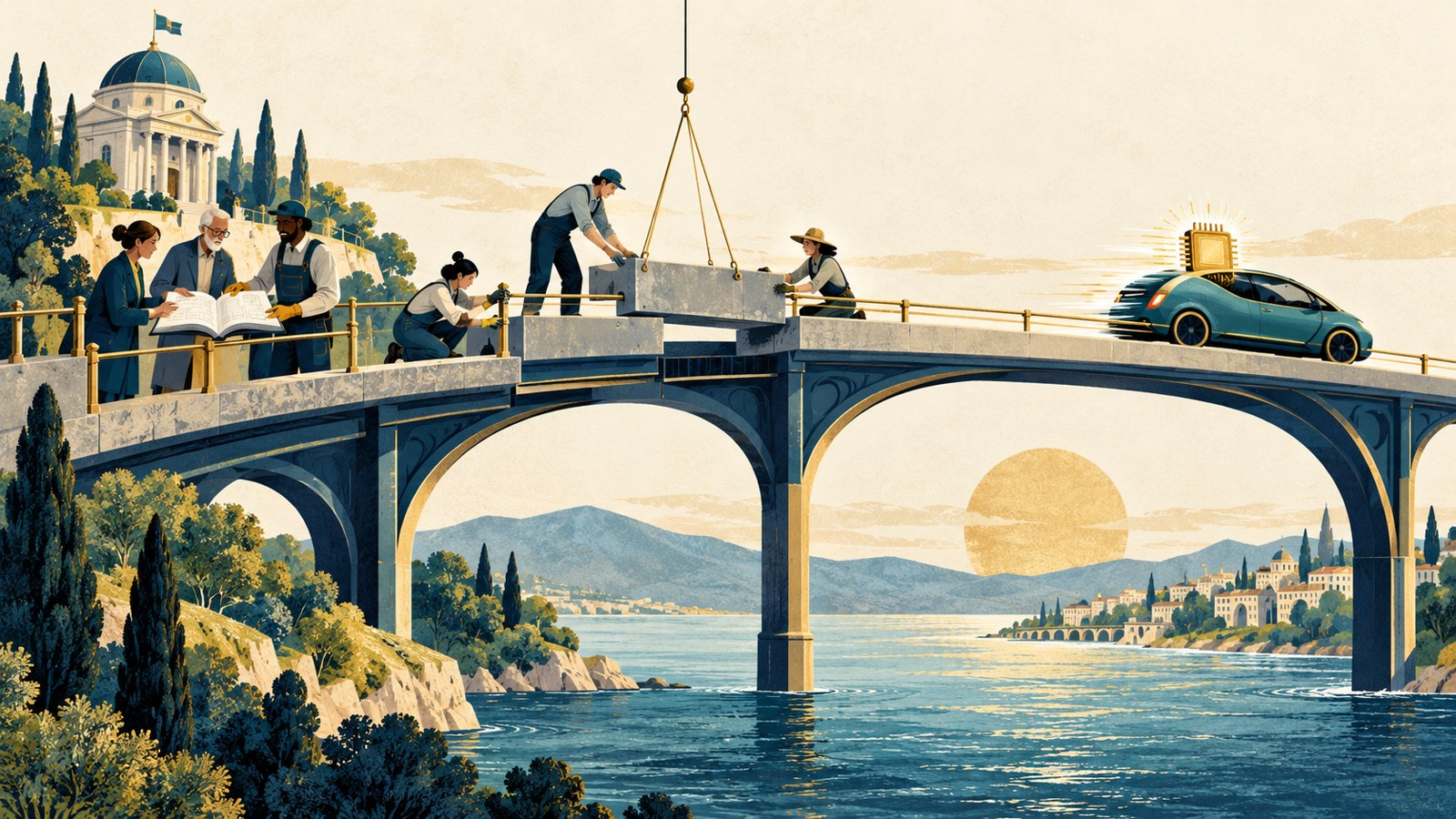
How do we bridge the gap between technological change and society’s ability to adapt?
6. Doing the King’s Arithmetic Differently
The king’s mistake was to judge the whole promise by the payments of the first few days. Our intuition can lead us into the same trap. We assume that something manageable today will remain manageable tomorrow. Or we make the opposite mistake: we see rapid change in one area and assume everything will change at the same pace.
First, we need to look beyond the current scale of a technology to the rate at which it is changing. Rather than stopping at “This seems fine for now,” we should ask, “What happens if this pace continues for a few more rounds?” Instead of assuming that AI will remain bad at the things it does badly today, we need to consider what would change if it became good at them.
That does not mean betting everything on a single future. Some changes arrive sooner than expected; others hit a wall. Governments should prepare for several possible futures in employment, education, and social welfare. Individuals would do well not to depend on a single tool or skill. More important than getting a prediction exactly right is leaving ourselves room to respond when it turns out to be wrong.
Our institutions also need to be easier to revise. We can build in procedures from the outset for reviewing the benefits and harms of a policy after it takes effect, and for changing it when necessary. Standards for safety and rights must hold, while the means of meeting them should be able to change in light of new evidence. Rather than waiting for a perfect answer, we need ways to learn and improve as we go.
For individuals, the habit of learning becomes more important. We need to try new tools, judge how they might change our work, and resist taking plausible-looking results at face value. Children need to learn to ask questions, verify answers, and work with others, just as much as they need to learn the right answers.
Finally, amid all that is changing, we must not lose sight of what is worth preserving. New tools cannot take over the work of building trusting relationships, trying to distinguish right from wrong, or accepting responsibility for our choices. Knowing what a technology can do is different from deciding what we should do with it. That decision is still ours.
Epilogue: A Morning Around Day Twenty
The most frightening moment in the gold-coin story is not day thirty-five. It is that morning around day twenty when the treasurer first takes another look at the books. The gold paid out by then might still seem manageable. But to anyone who has calculated what the remaining days will cost, the promise already looks very different.
We cannot know exactly which day we are living through. Technology’s future has neither the fixed doubling rate of the gold coins nor a catastrophe written into the arithmetic. What is clear is that today’s pace alone cannot tell us what tomorrow will bring. We can choose whether merely to catch up after change arrives, or to begin changing our institutions and the way we learn before it does.
Rather than closing the ledger and living today as we lived yesterday, it is time to look at the next page together. If the king had worked through the numbers just once before smiling and saying yes, the story might have ended differently. We, too, still have time to calculate and choose.
옛날 어느 왕이 공을 세운 신하에게 원하는 상을 말해 보라고 했다. 신하는 뜻밖에 소박한 것을 청했다. 오늘은 금화 한 닢, 내일은 두 닢, 모레는 네 닢. 매일 전날의 두 배씩만 달라는 것이었다. 왕은 웃으며 그 자리에서 허락했다.
처음 열흘은 정말 아무 일도 아니었다. 열흘째에 내준 금화는 512닢, 열흘 동안 모두 합쳐도 1,023닢이었다. 왕실 금고에서 보면 대수롭지 않은 양이다. 스무날째가 되자 그날 하루에만 52만 4,288닢이 나갔다. 누적으로는 100만 닢을 조금 넘겼다. 금화 한 닢을 8그램으로 치면 약 8.4톤이다. 이제 금고지기도 장부를 다시 들여다볼 만하다.
그런데 진짜 이야기는 그다음 열흘에 있다. 서른째 날 하루에 내줘야 할 금화는 약 5억 3,700만 닢이다. 서른 날 누적은 약 10억 7,400만 닢, 무게로 약 8,600톤이다. 미국의 공식 금 보유량 약 8,100톤보다 많다. 서른다섯째 날에는 누적 무게가 27만 톤을 넘는다. 인류가 지금까지 캐낸 금을 모두 모아도 감당할 수 없는 약속이다.
이 이야기의 핵심은 단지 ‘많아진다’는 데 있지 않다. 매일 두 배씩 늘어난다면, 오늘 하루에 내줄 금화가 어제까지 내준 금화를 모두 합친 것보다 많다. 서른째 날 하루치는 앞선 29일의 합계보다 정확히 한 닢 더 많다. 처음에는 감당할 만해 보였던 약속이 어느 순간 전혀 다른 문제가 된다.
나는 오늘날의 기술 변화에서 이 이야기의 한 장면을 떠올린다. 물론 모든 기술이 금화처럼 일정하게 두 배씩 늘어나는 것은 아니다. 그래도 이 우화는 묻게 한다. 우리는 내일의 변화를 오늘의 크기로만 헤아리고 있는 것은 아닐까.
2. 아주 느린 첫 칸들
지금까지 알려진 가장 오래된 석기는 케냐 로메퀴 유적에서 발견된 약 330만 년 전의 도구다. 이 330만 년을 하루 24시간으로 압축해 보자. 자정 0시에 누군가 돌을 깨뜨려 날을 세운다.
그 뒤로 하루의 대부분이 지나간다. 돌을 다듬는 방식이 달라지고, 불을 이용하는 지식이 쌓인다. 변화가 없었던 것은 아니다. 다만 오늘의 눈으로 보면 그 간격이 믿기 어려울 만큼 길다.
농경이 시작된 약 1만 2천 년 전은 이 시계로 밤 11시 54분 46초쯤이다. 자정까지 5분 남짓 남았을 때다. 메소포타미아에서 초기 문자가 등장한 약 5,200년 전은 11시 57분 44초. 하루가 끝나기 2분 남짓 전이다.
그다음부터는 우리가 익히 아는 사건들이 마지막 몇 초에 모인다. 구텐베르크가 유럽에서 금속활자 인쇄를 발전시킨 15세기 중반은 자정 약 15초 전이다. 와트의 증기기관 개량 특허가 나온 1769년은 약 7초 전, 라이트 형제의 첫 동력 비행이 이루어진 1903년은 약 3초 전이다. 2022년 말 ChatGPT의 공개는 2026년을 기준으로 자정 약 0.1초 전의 일이다.
우리가 일상이라 부르는 것의 상당 부분이 이 하루의 마지막 몇 초에 들어 있다. 한때 수많은 세대에 걸쳐 쌓이던 변화가 이제는 한 사람의 생애 안에 겹쳐 찾아온다. 새로운 도구를 이해하고, 그에 맞는 관습과 규칙을 만드는 시간도 그만큼 촉박해졌다.
330만 년을 하루로 줄이면, 오늘의 일상 대부분은 마지막 몇 초에 모인다.
3. 사회가 적응하는 데 걸리는 시간
새로운 기술은 언제나 사회를 흔들었다. 인쇄술은 지식이 퍼지는 길을 바꾸었고, 자동차는 사람과 물건이 움직이는 길을 바꾸었다. 그에 맞는 규칙과 생활 방식은 기술과 함께 완성된 채로 나오지 않았다.
15세기 중반 이후 유럽에 인쇄소가 늘어나면서 책과 논쟁이 이전보다 널리 퍼졌다. 인쇄물은 종교개혁에도 중요한 역할을 했다. 책을 만드는 도구의 변화가 종교적 권위와 정치 질서를 둘러싼 논쟁까지 넓힌 것이다. 사회가 새로운 정보 환경에 적응하는 과정은 길었고, 때로는 격렬했다.
자동차를 둘러싼 변화는 더 구체적이다. 1865년 영국의 이른바 ‘붉은 깃발법’은 도로를 달리는 기계 차량 앞에 사람이 깃발을 들고 걸어가도록 했다. 낯선 기계를 기존 도로에 어떻게 받아들일지 몰랐던 시대의 대응이었다. 영국의 운전면허 제도는 1903년에, 의무 운전시험은 1935년에 도입되었다. 교통 신호와 보험, 안전벨트 같은 장치들도 여러 시기에 걸쳐 자리를 잡았다.
그 과정이 평온했던 것은 아니다. 산업화에는 노동 착취와 사고, 환경오염이 뒤따랐고, 어떤 피해는 오랫동안 바로잡히지 않았다. 과거의 사회가 기술을 잘 따라잡았다고 말하기는 어렵다. 다만 물리적 시설을 깔고 제품을 보급하는 데 긴 시간이 필요한 기술에서는, 제도를 시험하고 고칠 시간도 상대적으로 길었다.
오늘의 디지털 기술은 그 조건을 바꾸고 있다. 이미 연결된 사람들에게 새 기능을 전달하는 데 공장을 새로 짓거나 도로를 다시 놓을 필요는 없다. 사회가 답을 찾는 동안, 기술은 다음 모습으로 바뀔 수 있다.
4. 금화 이야기의 후반부로 들어서다
1903년 12월 17일, 라이트 형제의 첫 비행은 12초 동안 약 37미터를 날았다. 축구장 하나를 가로지르지도 못한 거리다. 그로부터 66년 뒤인 1969년, 인간은 달에 발을 디뎠다. 첫 비행 소식을 접한 아이가 노인이 되어 달 착륙을 텔레비전으로 볼 수 있었다. 한 사람의 일생 안에 하늘과 우주가 모두 들어온 것이다.
반도체의 변화는 숫자로도 선명하다. 1971년 인텔의 마이크로프로세서 4004에는 약 2,300개의 트랜지스터가 들어 있었다. 2024년 엔비디아가 발표한 블랙웰 GPU에는 두 개의 칩 다이를 합쳐 2,080억 개가 들어갔다. 약 9천만 배다. 물론 트랜지스터 수가 곧 성능이나 과학기술 전체의 발전량은 아니다. 그래도 계산을 수행하는 물리적 기반이 얼마나 달라졌는지를 보여 주는 수치다.
그 기반 위에서 인공지능도 발전했다. 2016년 알파고는 이세돌 9단을 4대 1로 이겼다. 이듬해 발표된 알파고 제로는 사람의 기보를 학습하지 않고 스스로 대국하며 배웠고, 이세돌과 대국했던 버전을 100대 0으로 꺾었다.
2022년 말 공개된 ChatGPT는 이런 변화를 연구실 밖의 일상으로 끌어왔다. 누구나 웹에서 질문을 던지고 답을 받을 수 있었다. 인터넷과 스마트폰이라는 길이 이미 깔려 있었기에 가능한 확산이었다. 다만 서비스를 한번 써 보는 것과 학교나 기업이 일을 하는 방식을 바꾸는 것은 다르다. 접속은 빠르게 늘어도, 제대로 활용하고 책임을 나누는 데에는 시간이 걸린다.
변화는 연구하는 방식에도 들어왔다. 알파폴드 데이터베이스는 2억 개가 넘는 단백질의 구조 예측을 공개했다. 예측이 곧 실험적 확인을 뜻하지는 않는다. 그럼에도 연구자가 가설을 세우고 실험의 방향을 정하는 데 쓸 수 있는 출발점이 크게 늘었다.
내가 주목하는 것은 이 지점이다. 기술은 오래전부터 다음 기술을 만드는 도구였다. 이제 AI는 그 과정의 일부인 설계와 코딩, 자료 분석까지 거든다. 다음 기술이 나오는 시간을 단축할 가능성이 생긴 것이다. 실험과 검증, 에너지와 비용 같은 제약은 남아 있다. 그럼에도 다음 기술을 만드는 과정까지 빨라진다면, 사회가 한 변화에 익숙해지기도 전에 또 다른 변화가 찾아올 수 있다.
5. 숨이 찬 균형 장치들
법과 도덕과 문화는 기술과 다른 속도로 움직인다. 법은 여러 사람의 이해관계를 조정해야 하고, 관습은 반복되는 경험 속에서 자리 잡는다. 그 느림은 무조건 결함이 아니다. 섣불리 바뀌지 않기에 사람들이 믿고 기댈 수 있는 면도 있다. 문제는 그 신중함을 지키면서 변화에 대응할 수 있느냐는 것이다.
유럽연합의 인공지능법(AI Act)은 그 어려움을 보여 준다. 집행위원회가 법안을 제안한 것은 2021년 4월이다. 논의 중이던 2022년 말 ChatGPT가 등장했고, 최종 법에는 범용 AI 모델에 관한 규정도 포함되었다. 법은 2024년 8월 발효되어 단계적으로 적용되고 있다. 법을 만드는 동안에도 규율할 기술과 시장이 달라진 셈이다.
딥페이크는 더 아픈 예다. 동의 없이 타인의 얼굴을 합성한 성적 이미지가 퍼지면서 피해가 생겼다. 미국에서는 2025년 5월 TAKE IT DOWN Act가 제정되어 일정한 비동의 성적 이미지의 게시를 처벌하고 플랫폼에 삭제 절차를 요구하게 되었다. 이전에도 적용 가능한 법이 있었지만, 새로운 피해 양상을 충분히 다루지 못하는 틈이 있었다. 그 틈은 피해자에게 추상적인 제도 문제가 아니었다.
도덕과 문화의 질문은 더 어렵다. AI의 도움을 받아 만든 작품에서 사람의 창작은 어디까지인가. 학생이 AI로 쓴 리포트는 부정행위인가, 계산기를 쓰는 것과 같은가. 세상을 떠난 가족의 목소리를 AI로 되살리는 일은 위로인가, 애도를 가로막는 일인가. 같은 기술이라도 맥락과 사용 방식에 따라 답은 달라질 것이다.
AI가 대신 써 준 사과 메시지는 어떤가. 문장은 진심을 잘 전달할 수도 있고, 책임을 피하는 수단이 될 수도 있다. 무엇이 진심이고 무엇이 예의인지에 대한 감각도 새로운 도구와 함께 다시 만들어진다.
과거에도 기술과 사회 사이에는 간격이 있었다. 이제는 그 간격을 좁히기도 전에 새로운 변화가 겹쳐 온다. 법 하나를 고치고 새로운 예절에 익숙해지는 동안, 기술은 이미 다음 질문을 던진다. 뒤늦게 따라가는 것만으로 충분할지, 미리 묻고 준비할 필요가 있다.
기술의 속도와 사회의 적응 사이, 그 간격을 어떻게 줄일 것인가.
6. 왕의 계산법을 바꾸기
왕의 실수는 처음 며칠의 금화만 보고 약속 전체를 판단한 데 있었다. 우리의 직관도 그렇게 작동하기 쉽다. 지금 감당할 만하다는 이유로 앞으로도 그럴 것이라 여기거나, 반대로 가파른 변화가 보인다는 이유로 모든 것이 같은 속도로 바뀔 것이라 믿는다.
먼저, 지금의 크기보다 변화의 속도를 보아야 한다. ‘지금 이 정도면 괜찮다’에서 멈추지 않고, ‘이 속도가 몇 번 더 이어지면 어떻게 될까’를 묻는 것이다. AI가 오늘 서툰 일이 계속 서투르리라고 가정하기보다, 잘하게 되었을 때 무엇이 달라질지 생각해 볼 필요가 있다.
그렇다고 하나의 미래에 모든 것을 걸 수는 없다. 어떤 변화는 예상보다 빨리 오고, 어떤 변화는 벽에 부딪힌다. 국가라면 일자리와 교육과 복지의 여러 시나리오를 준비하고, 개인이라면 한 가지 도구나 기술에만 기대지 않는 편이 낫다. 예측의 정확성보다 예상이 빗나가도 대응할 수 있는 여지가 중요하다.
제도도 고치기 쉬워야 한다. 시행 뒤의 효과와 피해를 점검하고, 필요하면 수정할 절차를 처음부터 넣는 것이다. 안전과 권리의 기준은 지키되, 그것을 구현하는 방법은 새로운 증거에 따라 바꿀 수 있어야 한다. 완성된 답을 오래 기다리기보다 배우면서 개선하는 구조가 필요하다.
개인에게는 배우는 습관이 중요해진다. 새 도구를 직접 써 보고 내 일이 어떻게 달라질지 판단하되, 그럴듯한 결과를 그대로 믿지 않는 것. 아이들에게도 정답을 외우는 능력만큼 질문하고, 검증하고, 다른 사람과 협력하는 능력을 길러 주어야 한다.
마지막으로, 빠르게 바뀌는 것들 사이에서 지켜야 할 것을 놓치지 않는 일이다. 서로를 믿을 수 있는 관계, 옳고 그름을 판단하려는 노력, 자신의 선택에 책임을 지는 태도는 새 도구가 대신해 주지 않는다. 기술이 무엇을 할 수 있는지를 아는 것과 그 기술로 무엇을 할지 정하는 것은 다른 일이다. 후자는 여전히 우리의 몫이다.
에필로그 스물몇째 날의 아침
금화 이야기에서 가장 무서운 대목은 서른다섯째 날이 아니다. 스무날째쯤, 금고지기가 처음으로 장부를 다시 들여다보던 아침이다. 그날까지 나간 금화는 아직 감당할 만했을지 모른다. 그러나 남은 날들을 계산해 본 사람에게는 약속이 전혀 다르게 보였을 것이다.
우리가 지금 정확히 며칠째에 서 있는지는 알 수 없다. 기술의 미래에는 금화처럼 정해진 배수도, 예정된 파국도 없다. 하지만 지금의 속도만으로 내일을 짐작해서는 안 된다는 점은 분명하다. 변화가 닥친 뒤 따라가기만 할 것인지, 미리 제도와 배움의 방식을 바꿀 것인지는 선택할 수 있다.
장부를 덮고 어제처럼 오늘을 살기보다, 다음 장을 함께 들여다볼 때다. 왕이 그날 웃으며 허락하기 전에 한 번만 끝까지 계산해 보았더라면 이야기는 달라졌을 것이다. 우리에게도 아직, 계산하고 선택할 시간이 있다.